When we think about “schooling,” our minds usually jump straight to the “big three”: math, science, and literacy. We picture kids hunched over desks, solving for or memorising the dates of the Industrial Revolution. And while those things are obviously vital, there’s a massive piece of the developmental puzzle that often gets sidelined as a “luxury” or a “fun extra.” I’m talking about structured arts education.
I’ve seen it happen a hundred times a budget cut looms, and the first thing to go is the kiln or the violin program. But here’s the reality: art isn’t just about making pretty pictures to hang on the fridge. For a young learner, structured art is the laboratory where they learn how to think, how to fail, and how to connect with the world around them.
More Than Just Finger Painting: The Power of Structure
There’s a common misconception that “art” in schools is just a free-for-all where kids throw glitter at paper. While “process art” has its place, structured arts education is a different beast entirely. It involves a scaffolded curriculum—teaching techniques, history, theory, and critique in a way that builds over time.
Think of it like learning a language. You don’t just shout random words; you learn grammar, syntax, and vocabulary so you can eventually express complex thoughts. Structured art does the same for a child’s visual and auditory “voice.”
1. Cognitive Development and the “Creative Brain”
When a child learns to read music or follow a complex pottery technique, their brain is firing on all cylinders. Research in neurobiology suggests that engaging in the arts strengthens the bridge between the left and right hemispheres of the brain.
-
Spatial-Temporal Reasoning: Learning to paint or sculpt helps kids understand how objects fit together in space. This is the same part of the brain used for higher-level math.
-
Critical Thinking: In an art class, there isn’t always one “right” answer. A student has to decide: “If I mix this blue and yellow, will it be the shade of green I want? If not, how do I fix it?” That is real-time problem-solving.
2. The “Soft Skills” That Are Actually Hard Skills
We hear a lot about “soft skills” in the modern workforce—collaboration, empathy, and resilience. Structured arts education is arguably the best training ground for these traits.
Take a theater production, for example. A child isn’t just memorizing lines; they are learning that if they miss a cue, the whole scene falters. They are learning to rely on others. Or consider the “failed” art project. Every artist knows the sting of a drawing that didn’t turn out right. In a structured environment, a teacher guides that child to see the “mistake” as a pivot point. That is resilience in action.
3. Language and Literacy Boosts
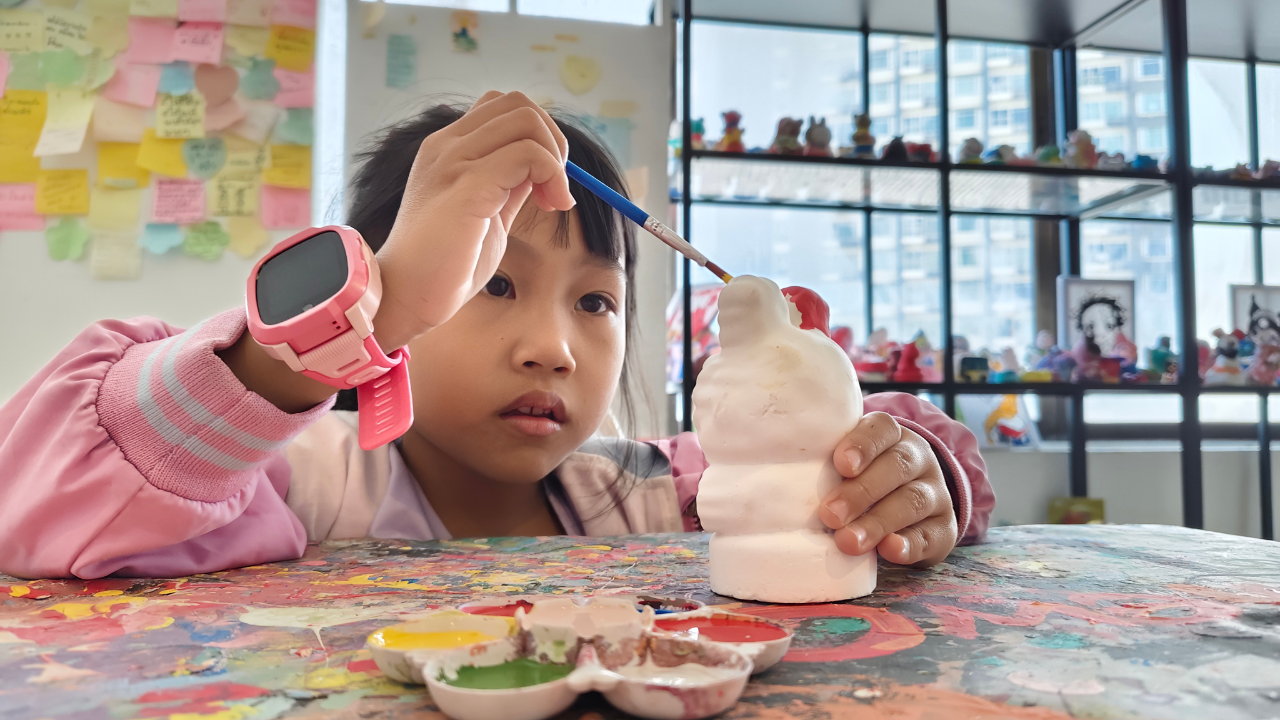
For younger learners (preschool through early elementary), the arts are a precursor to traditional literacy. Before a child can write the letter “A,” they need the fine motor skills to hold a pencil and the visual literacy to recognize shapes.
Drawing and storytelling go hand-in-hand. When a child draws a dog and tells you a story about it, they are practicing narrative structure. They are learning that symbols (drawings or letters) carry meaning.
Real-World Impact: From the Classroom to the Community
I remember visiting a local primary school where they had integrated a structured arts education program into their science curriculum. The kids weren’t just reading about botanical cells; they were drawing them using charcoal and ink.
The level of detail they noticed because they had to render the image was staggering. They weren’t just memorizing; they were observing. This is why the arts are so critical—they teach us how to actually look at the world, not just glance at it.
The Role of Specialized Institutions
While general classroom exposure is great, there is something magical about stepping into a dedicated space for creativity. Many families find that their children truly blossom when they engage with community-focused centers that bridge the gap between “hobby” and “discipline.”
For instance, the Evergreen Opera Music and Art Centre has become a local touchstone for this kind of growth. When kids walk into a space specifically designed for the arts—surrounded by the echoes of scales being practiced and the smell of fresh oil paints—their mindset shifts. It stops being “playtime” and starts being “practice.” At the Evergreen Opera Music and Art Centre, the structure provides a safety net that allows for bold experimentation.
Emotional Regulation and Identity
Growing up is hard. Kids deal with a lot of big emotions they don’t always have the words for. Structured arts education provides a healthy outlet for that energy.
-
Self-Expression: Art gives kids a way to say, “This is who I am,” without needing a complex vocabulary.
-
Stress Reduction: Engaging in a “flow state” which happens often during music practice or painting—lowers cortisol levels. It’s a form of mindfulness that kids can carry with them into adulthood.
Cultural Awareness and Empathy
Art doesn’t exist in a vacuum. A structured program introduces students to artists from different eras, countries, and backgrounds. When a child learns about Mexican muralism or Japanese woodblock prints, they aren’t just learning “art history” they are learning that their way of seeing the world is just one of many. This builds a foundation of empathy and global citizenship that is desperately needed today.
Summary of Benefits
| Benefit Category | Key Outcome |
| Academic | Improved SAT scores and better spatial-math skills. |
| Motor Skills | Enhanced hand-eye coordination and fine motor control. |
| Social | Better collaboration and communication through group projects. |
| Emotional | Increased self-confidence and a sense of personal agency. |
Why We Can’t Wait
The “wait and see” approach doesn’t work with child development. The neural pathways being formed in those early years are incredibly plastic. If we deprive young learners of the chance to engage in structured arts education, we aren’t just taking away their crayons; we’re taking away a fundamental way for them to process reality.
We need to stop viewing the arts as a “frill.” It is a core pillar of a functional, holistic education. Whether it’s through a dedicated school program or an extracurricular journey at a place like the Opera Music and Art Centre, giving a child the tools to create is giving them the tools to succeed in any field they eventually choose.