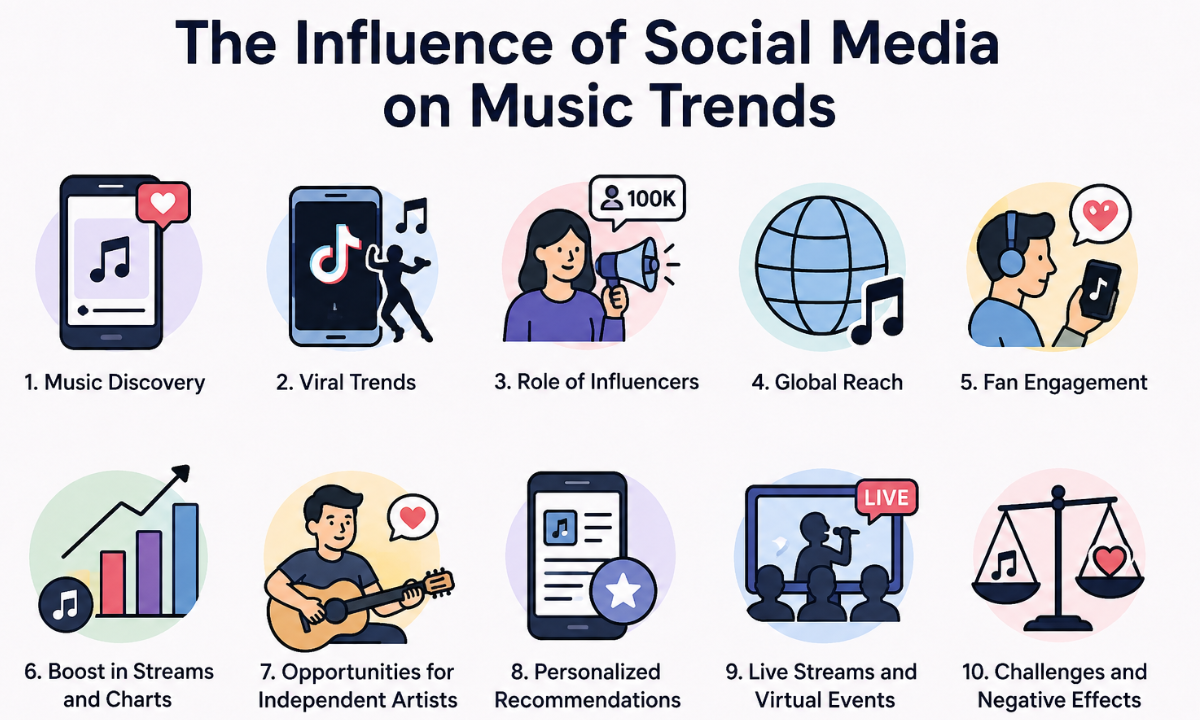
The rise of social media has transformed nearly every aspect of modern life, including the way people discover, consume, and share music. Platforms such as TikTok, Instagram, YouTube, X, and Facebook have become powerful tools that influence music trends across the globe. Unlike traditional media, where radio stations, television channels, and record labels controlled the promotion of music, social media allows artists and listeners to participate directly in shaping musical success. Today, a song can become a global sensation within days through viral videos, user-generated content, and online communities. As a result, social media has become one of the most significant forces driving the music industry and influencing public musical preferences.
The Evolution of Music Promotion
Before the emergence of social media, music promotion relied heavily on radio broadcasts, television appearances, magazines, and physical album sales. Record companies invested large amounts of money in marketing campaigns to ensure that artists reached their target audiences. Success often depended on industry connections and access to traditional media channels.
The introduction of social media changed this landscape dramatically. Artists can now share their music directly with audiences without relying solely on record labels or broadcasting networks. Platforms such as YouTube allow musicians to upload music videos instantly, while Instagram and TikTok enable them to engage with fans through short-form content. This direct connection reduces barriers to entry and creates opportunities for independent artists to gain recognition alongside established performers.
Viral Trends and Music Popularity
One of the most powerful ways social media influences music trends is through virality. A song can gain widespread popularity when users incorporate it into challenges, dance routines, memes, or creative videos. TikTok, in particular, has become a major driver of music discovery. Many songs that initially received little attention have achieved international success after becoming part of viral trends.
When thousands or even millions of users create content using the same song, the platform’s algorithm promotes that content to wider audiences. As more people hear the song repeatedly, its popularity increases. This process often leads to higher streaming numbers, chart success, and increased visibility for the artist. Viral trends demonstrate how ordinary users can significantly influence which songs become popular.
The Role of Influencers
Social media influencers play a major role in shaping music trends. Influencers often have large and dedicated audiences who trust their recommendations. When influencers use a particular song in their content, their followers are more likely to listen to it, share it, and create similar content.
Music companies frequently collaborate with influencers to promote new releases. Instead of relying solely on traditional advertisements, they encourage influencers to incorporate songs into videos, tutorials, lifestyle content, and entertainment posts. This strategy creates organic exposure and helps songs reach specific demographic groups. Influencers act as intermediaries between artists and audiences, accelerating the spread of music trends across different communities.
Music Discovery in the Digital Age
Social media has fundamentally changed how people discover new music. In the past, listeners often depended on radio stations, music television programs, or recommendations from friends. Today, algorithms personalize music recommendations based on user behavior and interests.
When individuals interact with music-related content, social media platforms analyze their preferences and suggest similar songs, artists, and playlists. This personalized experience increases exposure to diverse genres and emerging musicians. Users can discover music from different countries, cultures, and languages without geographical limitations. As a result, social media contributes to the globalization of music and promotes cultural exchange among listeners worldwide.
Opportunities for Independent Artists
One of the most significant impacts of social media is the opportunity it provides for independent artists. Previously, achieving success without the support of a major record label was extremely difficult. Social media platforms now offer musicians affordable and accessible ways to promote their work.
Independent artists can build audiences through regular content creation, live streaming, and direct engagement with fans. They can share behind-the-scenes footage, songwriting processes, and personal stories that help establish authentic connections with listeners. This direct interaction strengthens fan loyalty and allows artists to cultivate communities around their music.
Numerous musicians have launched successful careers through social media alone. By consistently creating engaging content and connecting with audiences, independent artists can gain recognition, secure performance opportunities, and attract industry attention without significant financial resources.
Fan Engagement and Community Building
Social media has transformed fans from passive consumers into active participants in music culture. Fans can comment on posts, participate in discussions, attend virtual events, and communicate directly with artists. This level of interaction was nearly impossible in the era of traditional media.
Online communities dedicated to specific artists or genres foster strong connections among fans. These communities share music recommendations, organize fan projects, and contribute to promotional efforts. In many cases, fans play a crucial role in increasing an artist’s visibility by sharing content and encouraging others to listen.
The ability to engage directly with audiences also allows artists to receive immediate feedback on their work. This interaction helps musicians understand audience preferences and adapt their creative strategies accordingly.
Challenges and Negative Effects
Despite its many benefits, social media also presents challenges for the music industry. The emphasis on virality can sometimes prioritize short-term popularity over artistic quality. Songs may become successful because of a trend rather than their musical value, leading some artists to focus on creating content optimized for social media rather than producing innovative music.
Additionally, the fast-paced nature of social media creates pressure for artists to maintain constant online visibility. Musicians are often expected to produce frequent content, interact regularly with followers, and stay relevant in highly competitive digital environments. This pressure can contribute to stress, burnout, and reduced focus on creative development.
Another concern is the influence of algorithms. While algorithms help users discover music, they can also limit exposure by favoring certain types of content. As a result, talented artists may struggle to gain visibility if their content does not align with platform trends or algorithmic preferences.
The Future of Music Trends
As technology continues to evolve, social media is expected to play an even greater role in shaping music trends. Artificial intelligence, virtual reality, and advanced recommendation systems may further personalize music experiences and create new opportunities for artists and listeners. Live-streaming concerts, interactive fan experiences, and digital collaborations are likely to become increasingly common.
The relationship between social media and music will continue to influence how songs are created, promoted, and consumed. Artists who effectively use digital platforms will have greater opportunities to reach global audiences and build lasting careers.
Conclusion
Social media has revolutionized the music industry by transforming music promotion, discovery, and fan engagement. Through viral trends, influencer marketing, personalized recommendations, and direct artist-fan interaction, social media significantly shapes contemporary music trends. It has opened doors for independent artists, expanded global access to diverse musical styles, and empowered audiences to participate actively in music culture. Although challenges such as algorithmic bias and the pressure to achieve virality remain, the overall impact of social media on music has been profound. As digital technologies continue to advance, social media will remain a powerful force influencing the future direction of music trends around the world.
Curious about music classes? Explore our music classes at Opera Music & Arts Centre.